Guide
Concrete vs HDPE Storm Pipe: What Actually Decides It
The two storm pipe materials that show up on most commercial civil plans in the OKC metro, compared honestly: how each one carries load, what each one asks of the crew installing it, and where each is the right call.
Owners and developers ask this when they see two bids with different pipe on them, or when an engineer offers an alternate. The short answer: reinforced concrete pipe (RCP) carries load mostly by itself, and HDPE carries load with the help of the soil packed around it. That one difference explains almost everything else about how they behave.
Neither material is "better" in the abstract. The right one depends on what the engineer designed for, what the city will accept for a system it may end up owning, how deep the pipe sits, and what will drive over it. 365 Excavation & Land Solutions installs storm sewer on commercial sites across the metro, and the install details below are where most storm problems actually start.
If you already know what you want built, the storm sewer page covers scope, process and what a job like it involves instead.
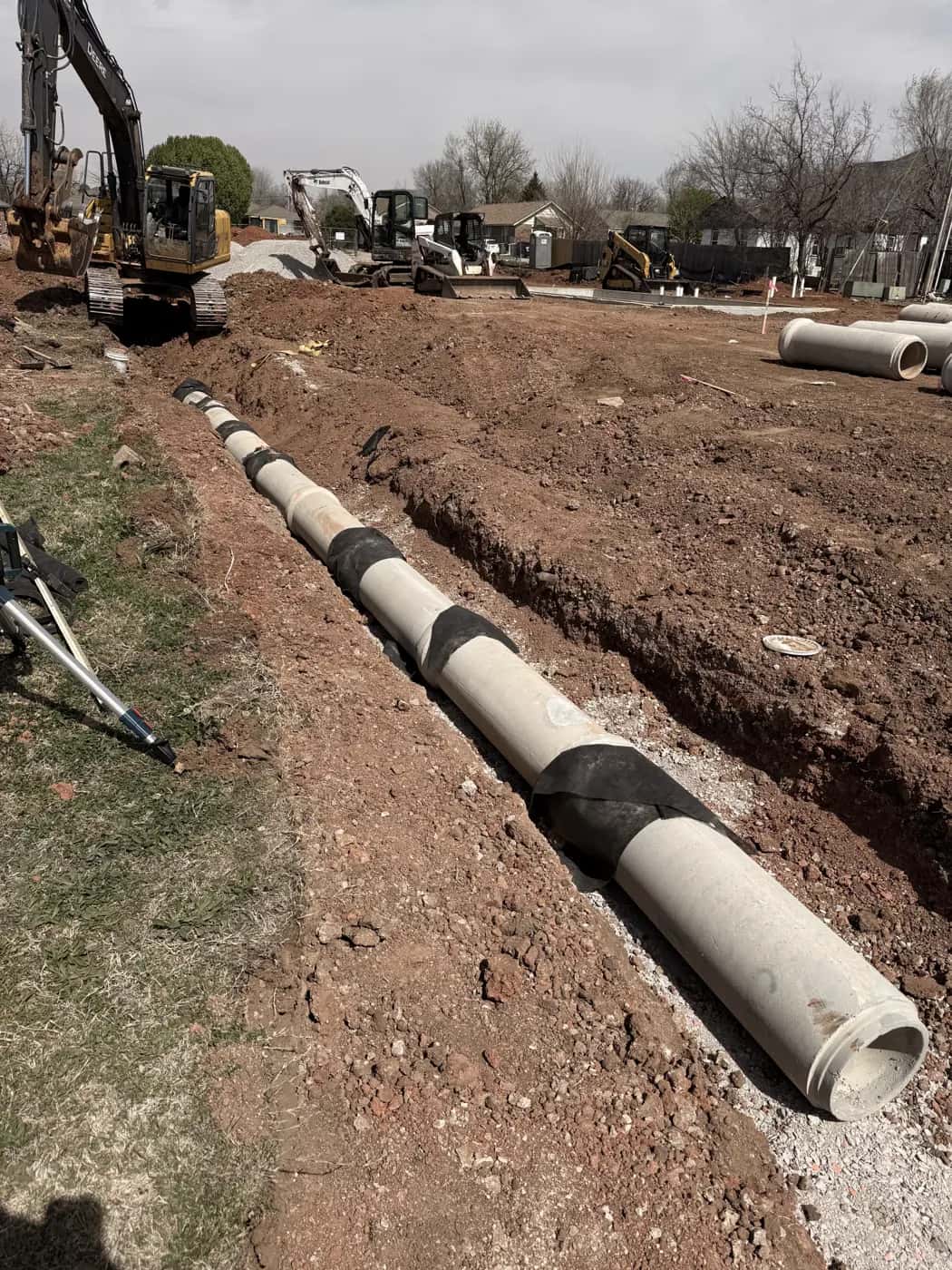
Straight talk: we install to the plan, we do not design it
We are the crew that builds the storm system, not the engineer who sizes it. Pipe material, diameter, slope and structure locations are set by the civil engineer and approved by the city. We will flag anything on a plan that looks like it will be a problem in the field, but we will not swap a material on our own to win a bid.
If a bid you are holding has a different pipe on it than the plans, ask why before you compare the numbers.
Head to Head
Reinforced concrete pipe (RCP)
Rigid, heavy pipe that gets most of its strength from its own wall. The standard on a lot of public and commercial storm systems.
HDPE pipe
Lightweight, flexible plastic pipe that relies on properly placed and compacted backfill around it to hold its shape.
| What you're comparing | Reinforced concrete pipe (RCP) | HDPE pipe |
|---|---|---|
| How it carries load | The pipe wall does most of the work. Good bedding still matters, but the pipe is not depending on the soil beside it to stay round. | The pipe and the soil around it work as a system. Backfill that is not placed and compacted the way the spec says lets the pipe deflect. |
| Weight and handling | Heavy. Sections are set with the excavator one at a time, and every joint is a deliberate step. | Light enough to handle with far less equipment, and sections run longer, so there are fewer joints on a run. |
| What the install demands | Line, grade and bedding, then joints sealed or wrapped so fines cannot wash in. | All of that, plus close attention to backfill material and compaction alongside the pipe, and to minimum cover before heavy equipment crosses it. |
| Shallow cover | Tolerates less soil above it because the pipe itself is carrying the load. | Needs the minimum cover the manufacturer and engineer call for before loaded trucks or equipment drive over it. |
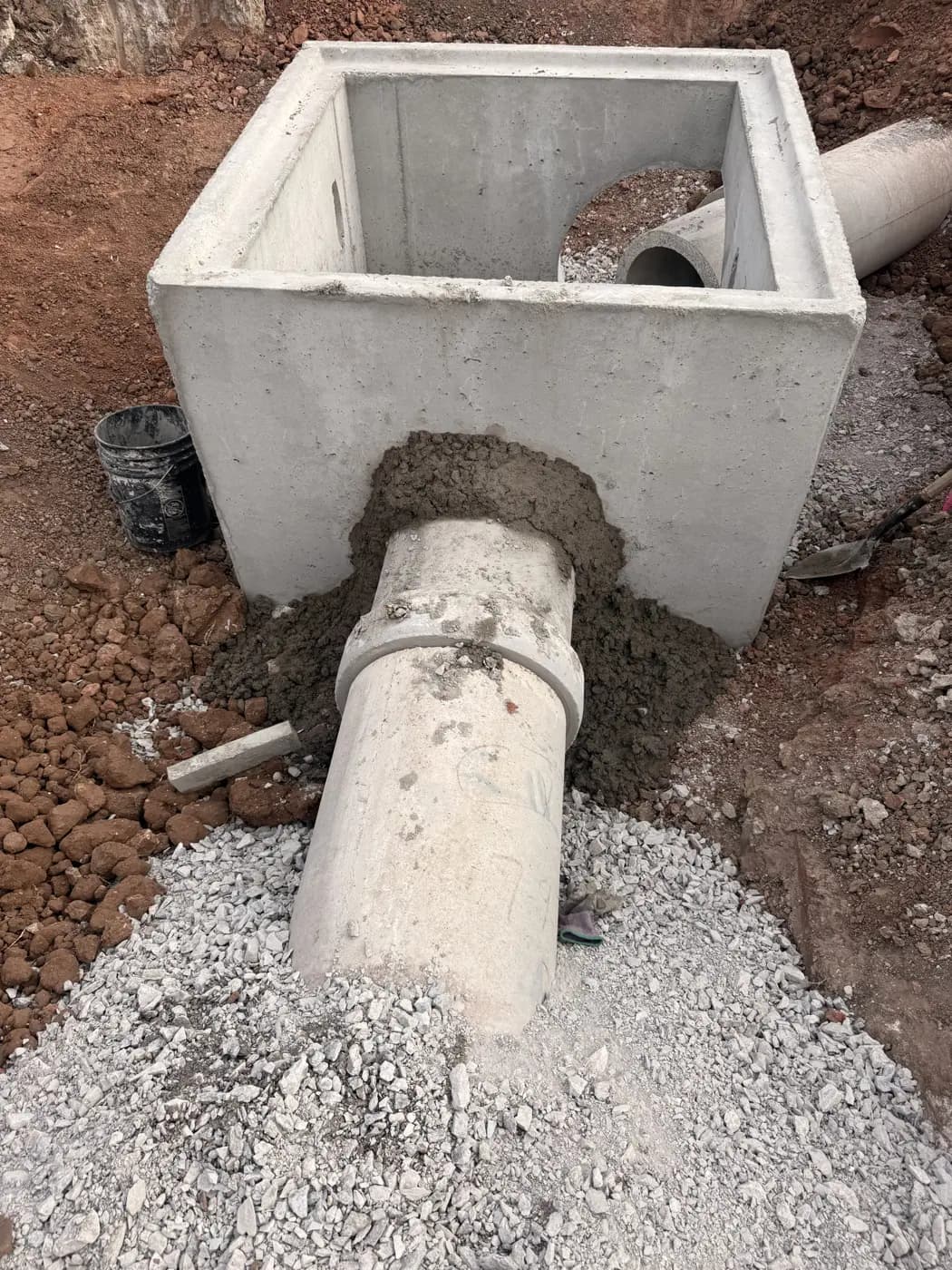
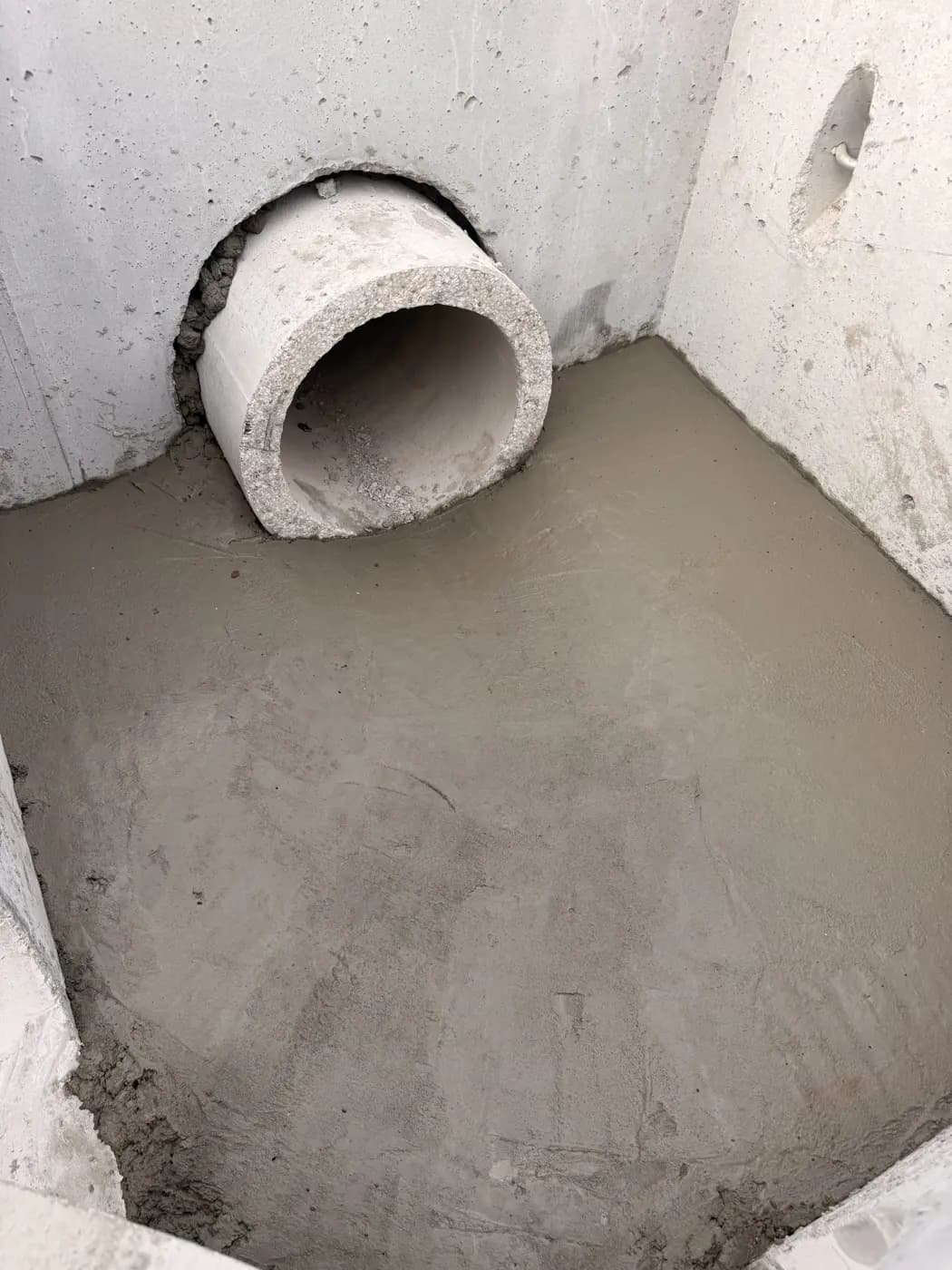
| Connecting to structures | Ties into precast inlets and junction boxes with grouted connections inside the box. | Ties in with the fittings and details the manufacturer and engineer specify for flexible pipe. |
| Who decides | The civil engineer, and the city's standards if the system will be public. | Same. An HDPE alternate is a design change, not an install-day swap. |
Where Each One Is the Right Call
Reinforced concrete pipe (RCP): best for
- Runs under parking lots and drives that will carry trucks
- Systems a city will own once they are accepted, where the spec calls for concrete
- Shallow cover where there is little soil above the pipe to help carry the load
- Sites where the engineer has already designed around RCP and precast structures
HDPE pipe: best for
- Private systems where the engineer and the city allow it
- Long runs where fewer, longer pipe sections save handling time
- Sites where heavy pipe is hard to get to the trench
- Situations the engineer has specifically designed and detailed for flexible pipe
The pipe is rarely what fails. The install is.
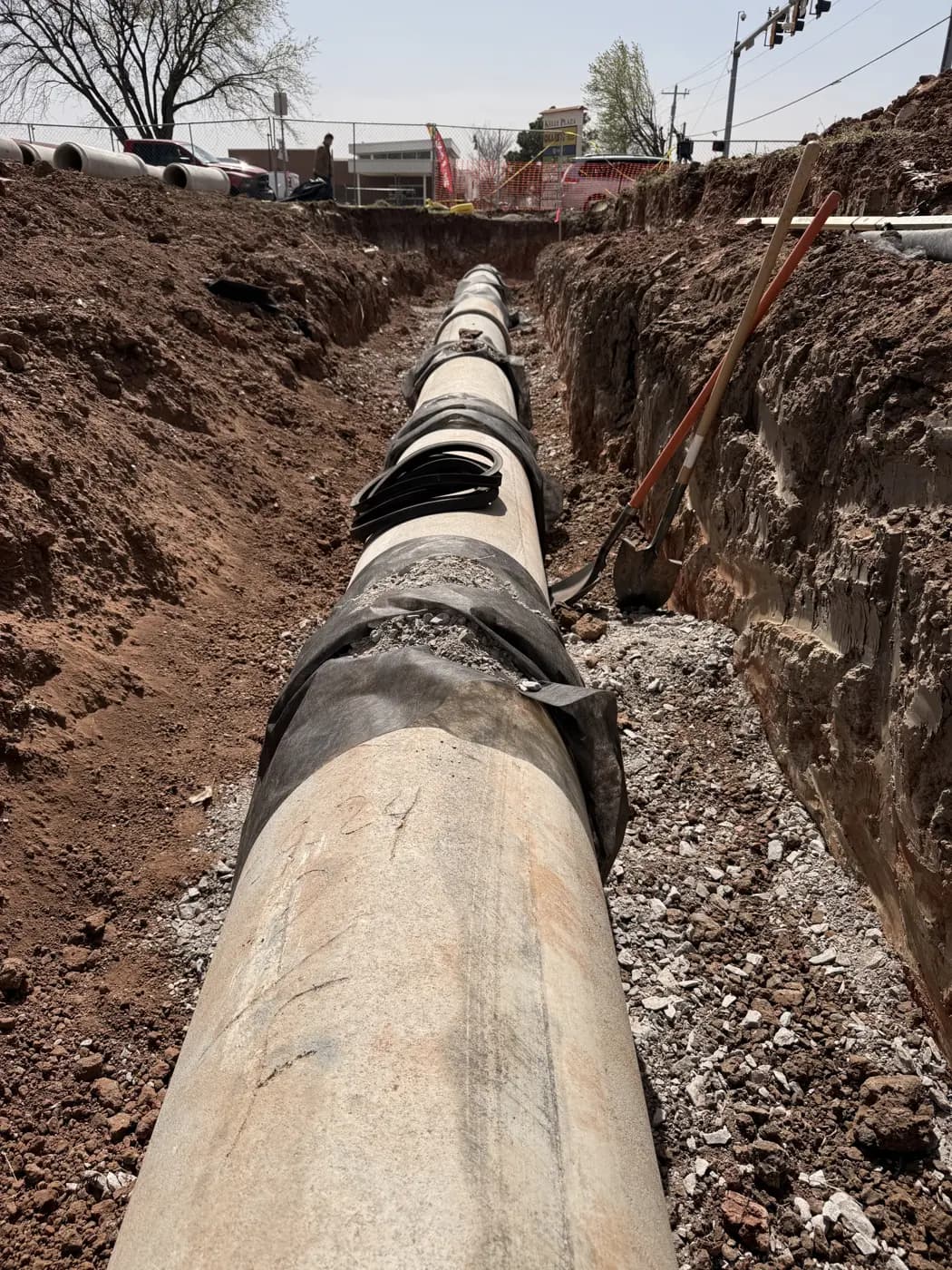
When a storm line causes trouble under a paved lot, it is almost never because somebody picked the wrong material. It is because a joint was not sealed and soil washed into the pipe, leaving a void that eventually shows up as a sinkhole. Or the pipe was set off grade and now holds water and silt. Or the trench was backfilled in one big dump instead of compacted lifts, and the lot settled over it.
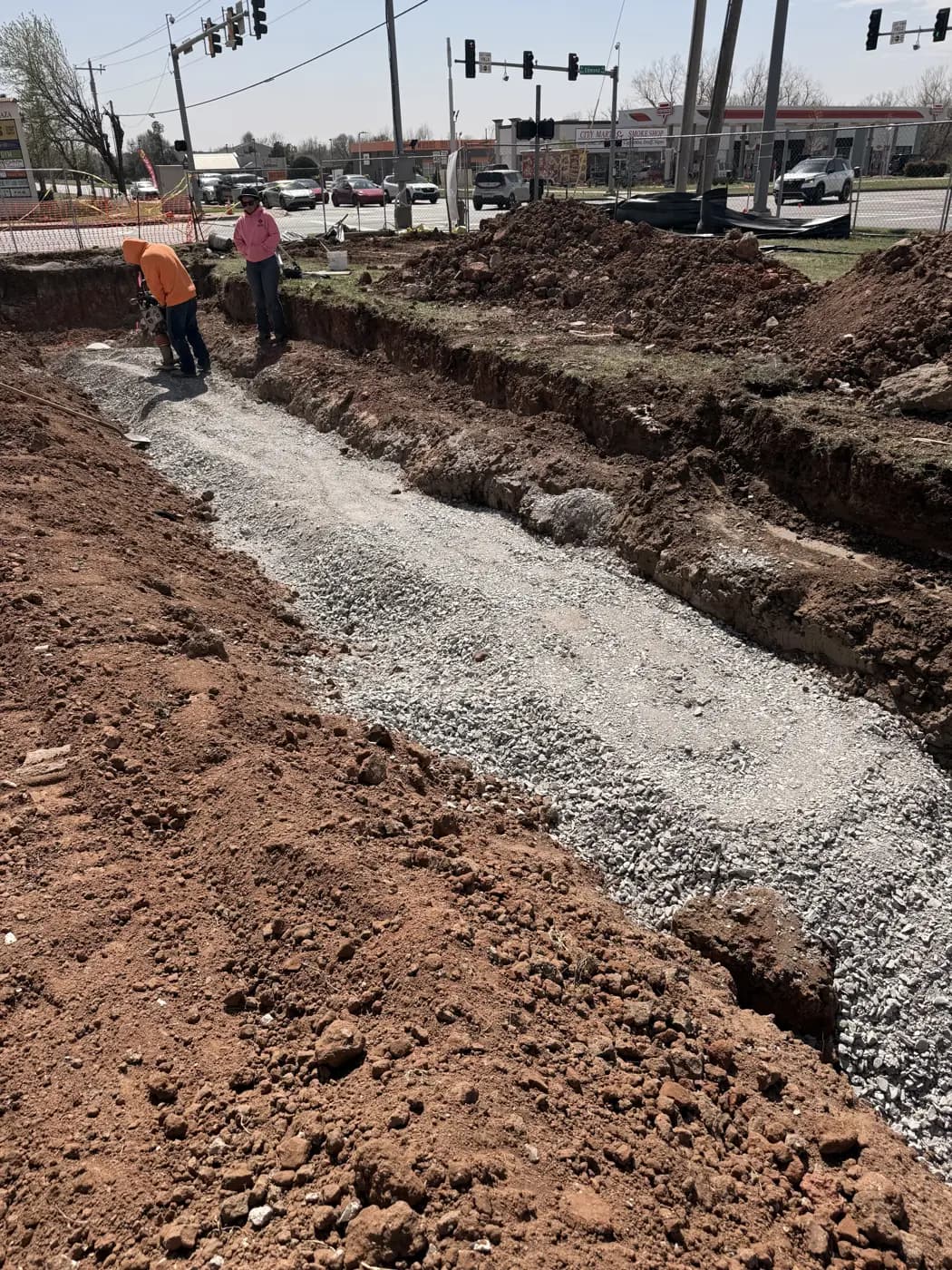
That is why our storm work is built around the boring parts: rock bedding under every run, grade checked on every joint before it is covered, joints wrapped, connections grouted inside the structures, and backfill compacted in lifts. Those steps are the same whichever pipe the plan calls for.
Why plans in the metro so often show concrete
A lot of commercial storm systems tie into city lines or sit in areas the city will eventually take over, and public standards often favor RCP for those. Under truck traffic and shallow cover, concrete's self-supporting strength is also simply easier to live with. On private systems with room for cover and an engineer who has detailed flexible pipe, HDPE shows up more often.
If you are weighing an alternate, the question to ask the engineer is not which pipe is cheaper. It is whether the design, the cover and the backfill spec support it, and whether the city will accept it.
What Your Ground Changes
The metro is not one kind of site. What is obviously the right call on a built-out redevelopment lot is the wrong one on a wooded tract, and the ground and the site underneath decide it.
Moore, OK
Cleveland County
A lot of Moore work is redevelopment along I-35, where new storm runs tie into existing lines under or beside active streets. Tie-in depth and traffic control often matter more to the schedule than the pipe material.
Site work in MooreOklahoma City, OK
Oklahoma County
Commercial sites in OKC are typically flat and paved edge to edge, so storm sewer and detention carry the whole site's runoff. Grade on every joint matters because there is very little slope to work with.
Site work in Oklahoma CityNorman, OK
Cleveland County
Much of Norman drains toward Lake Thunderbird, so stormwater and erosion control get extra attention during construction. Keeping silt out of an open storm system is part of the job here, not an afterthought.
Site work in NormanEdmond, OK
Oklahoma County
Rolling ground and fast development mean storm runs here can be deeper and longer between structures. Depth changes how the trench is cut and how much backfill has to be compacted.
Site work in EdmondWhat This Looks Like on the Ground
Frequently Asked Questions
Is concrete or HDPE storm pipe better for a commercial site?
Neither in general. Concrete pipe carries load mostly by itself and is common under truck traffic and in systems a city will own. HDPE is lighter and relies on properly compacted backfill to hold its shape. The civil engineer picks based on loading, cover and the city's standards, and the install matters more than the material.
Can I swap concrete pipe for HDPE to save money?
Only if the engineer redesigns or approves it and the city accepts it. Flexible pipe needs specific backfill and cover details, so it is a design change, not something a contractor should substitute on install day.
What causes sinkholes over storm pipe?
Usually soil washing into the pipe through an unsealed joint or a bad connection, which leaves a void that grows until the surface drops. Wrapped joints, grouted connections and compacted backfill are what prevent it.
Do you install precast inlets and junction boxes too?
Yes. We receive, set and tie in precast structures along with the pipe, grout the connections, and set inlets to finished grade.
The Work Behind This Guide
Everything above is one of these services, or the drainage work that keeps it from failing.
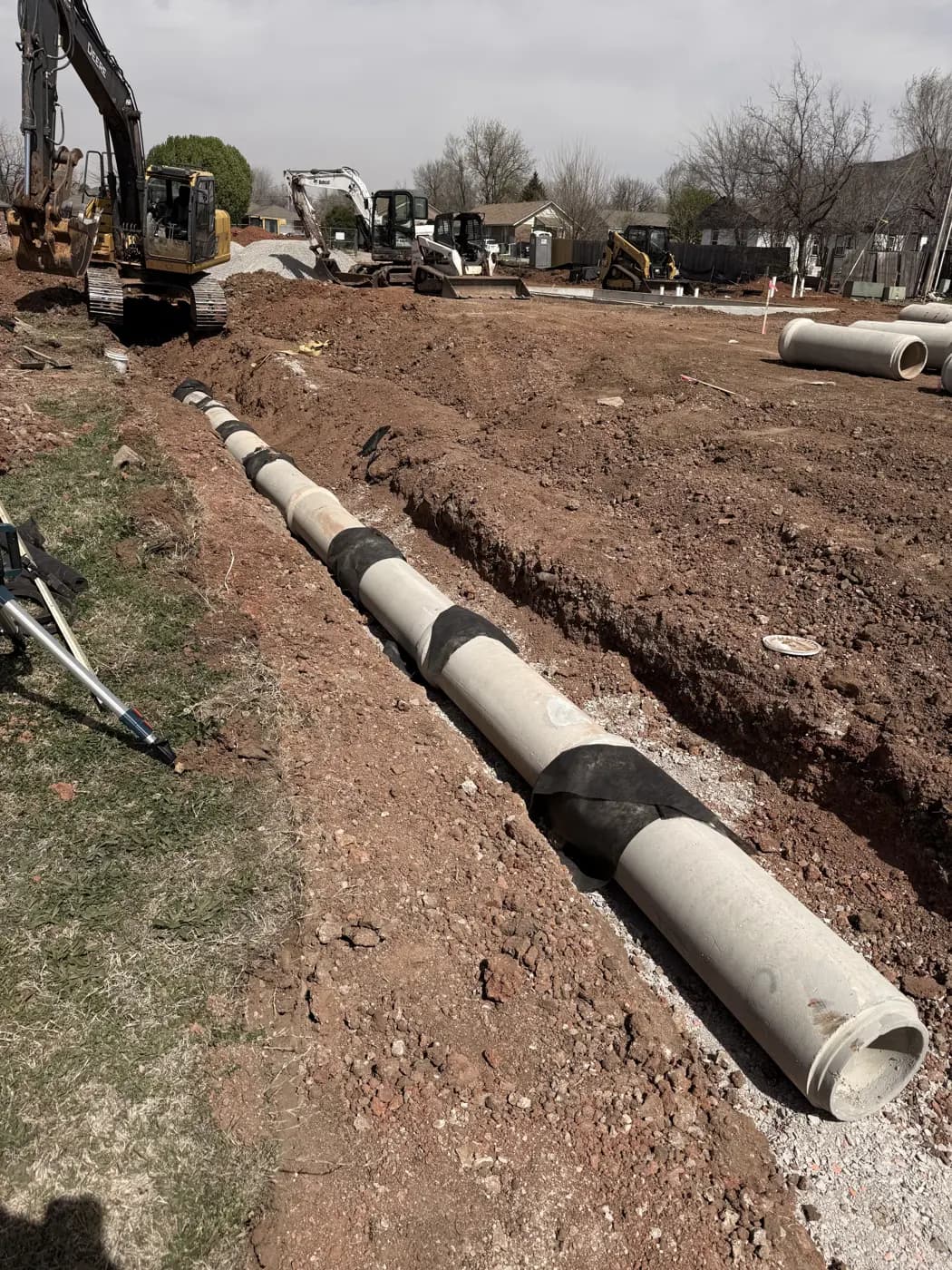
Storm Sewer
Pipe, inlets and junction boxes set to plan grade, sealed, and backfilled before the paving goes down.
Learn more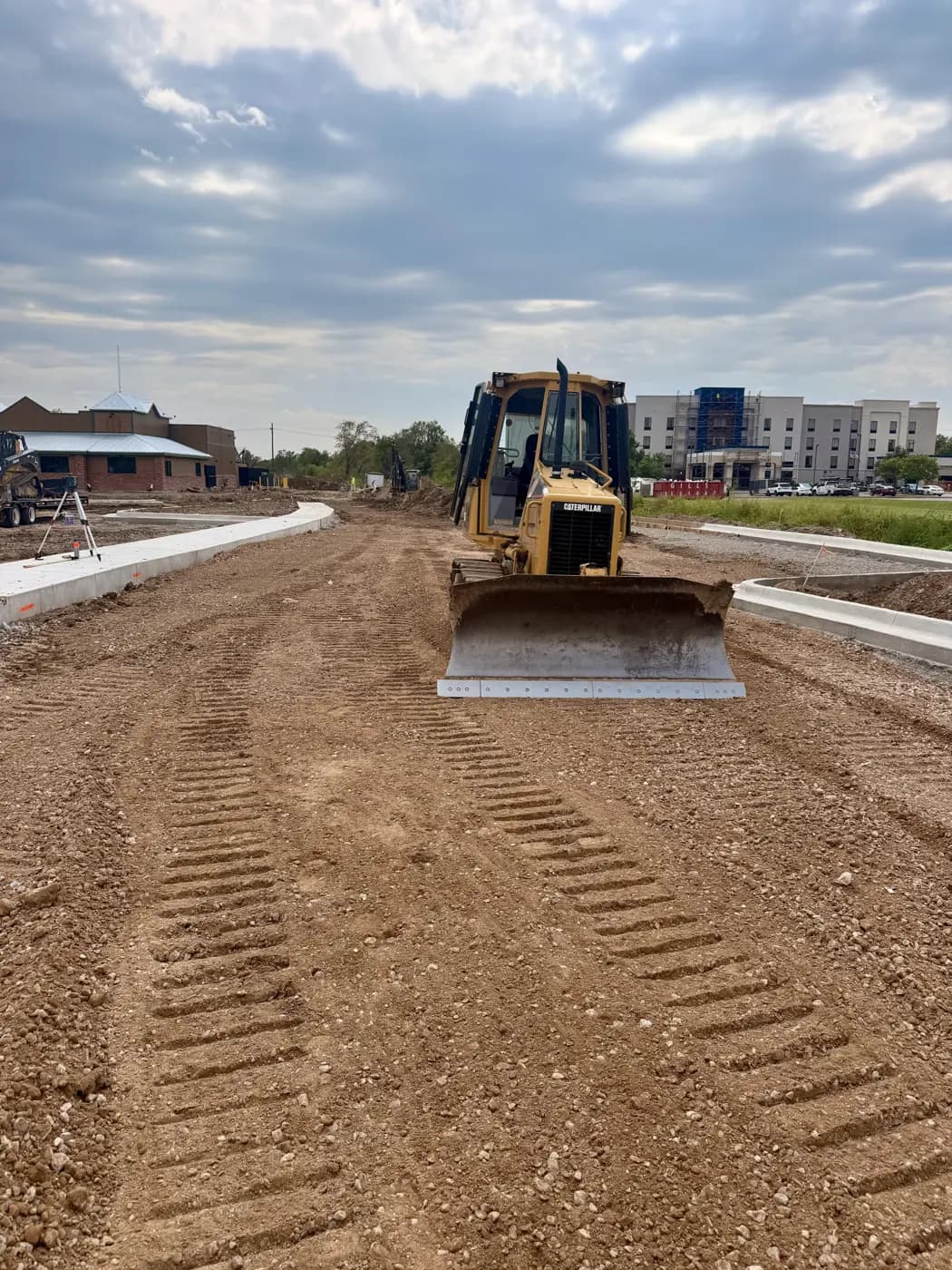
Earthwork
Cut, fill and rough grade to the civil plan, so every trade after us starts on time.
Learn more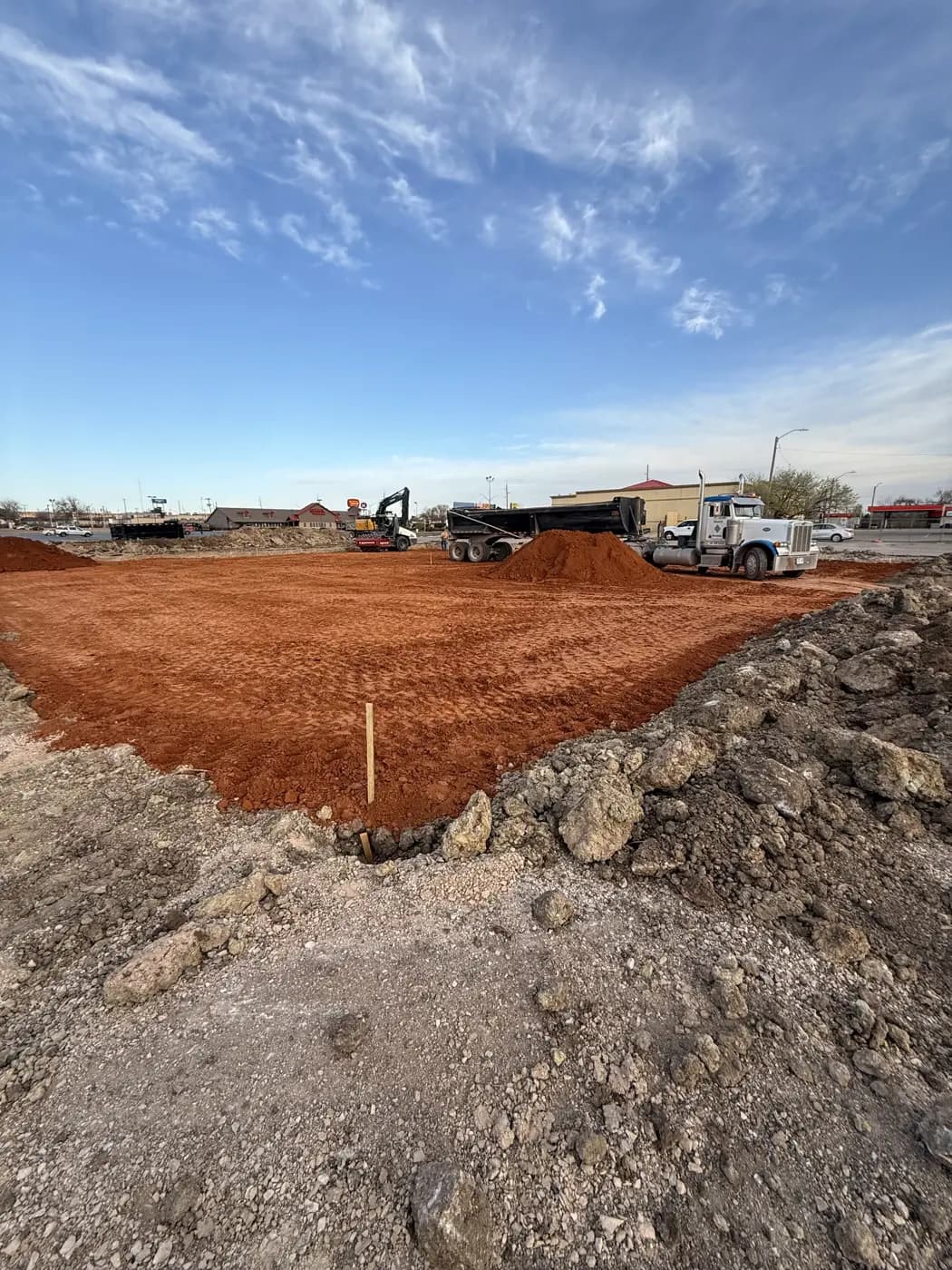
Subgrade Preparation
Pads and paving subgrade built in lifts, at grade and at density, ready for the testing lab.
Learn moreStill not sure which one your ground wants?
Tell us where the gate is and what you are trying to end up with. We will walk it and tell you what we would build, including when the answer is less work than you were expecting.
Contact Us Directly
Prefer to call or email instead of filling out the form? Reach us directly:
Phone
(405) 265-8749Hours
- Monday – Friday8:00 AM – 5:00 PM
- Saturday9:00 AM – 5:00 PM
- Sunday12:00 PM – 4:00 PM
Service Area
Oklahoma & surrounding states. We travel 3–5 hours for commercial sites.