Guide
Land Clearing vs Forestry Mulching: Which One Your Lot Needs
Two very different ways to open up a wooded or overgrown lot. One removes everything, roots and all. The other grinds the brush in place and leaves the ground covered. The right one depends on what the ground is for.
Parts of the metro, especially east Edmond and east Norman, are covered in oak timber and thick brush. Plenty of in-town lots have simply grown over. When it is time to open one up, the first question is not how much it costs. It is what the ground is going to be used for afterward.
If something is being built on it, the trees and the roots have to come out. If you just need a lot, a fence line or a pasture opened up and kept usable, grinding the growth in place is often the faster, cleaner answer.
If you already know what you want built, the land clearing page covers scope, process and what a job like it involves instead.
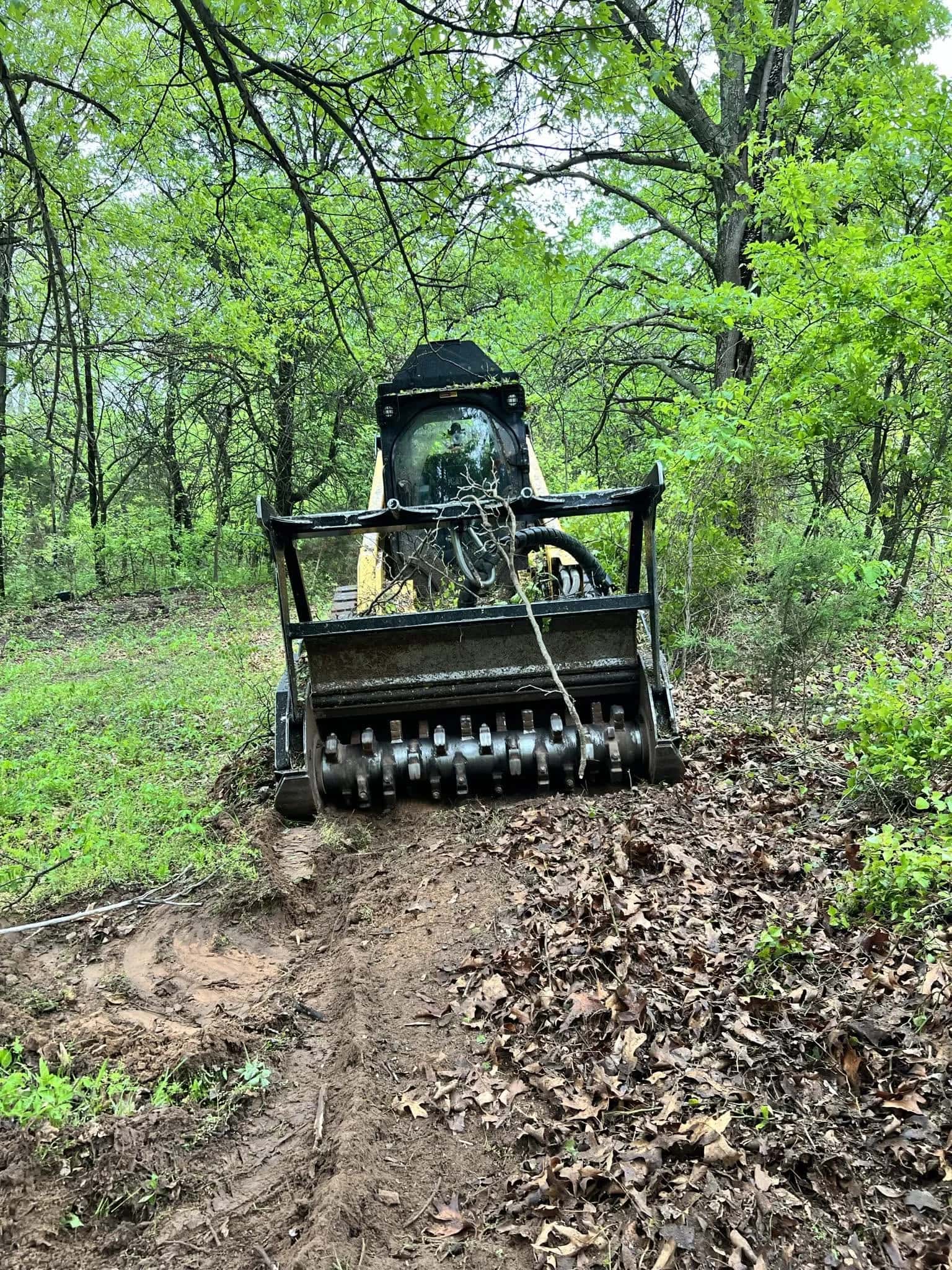
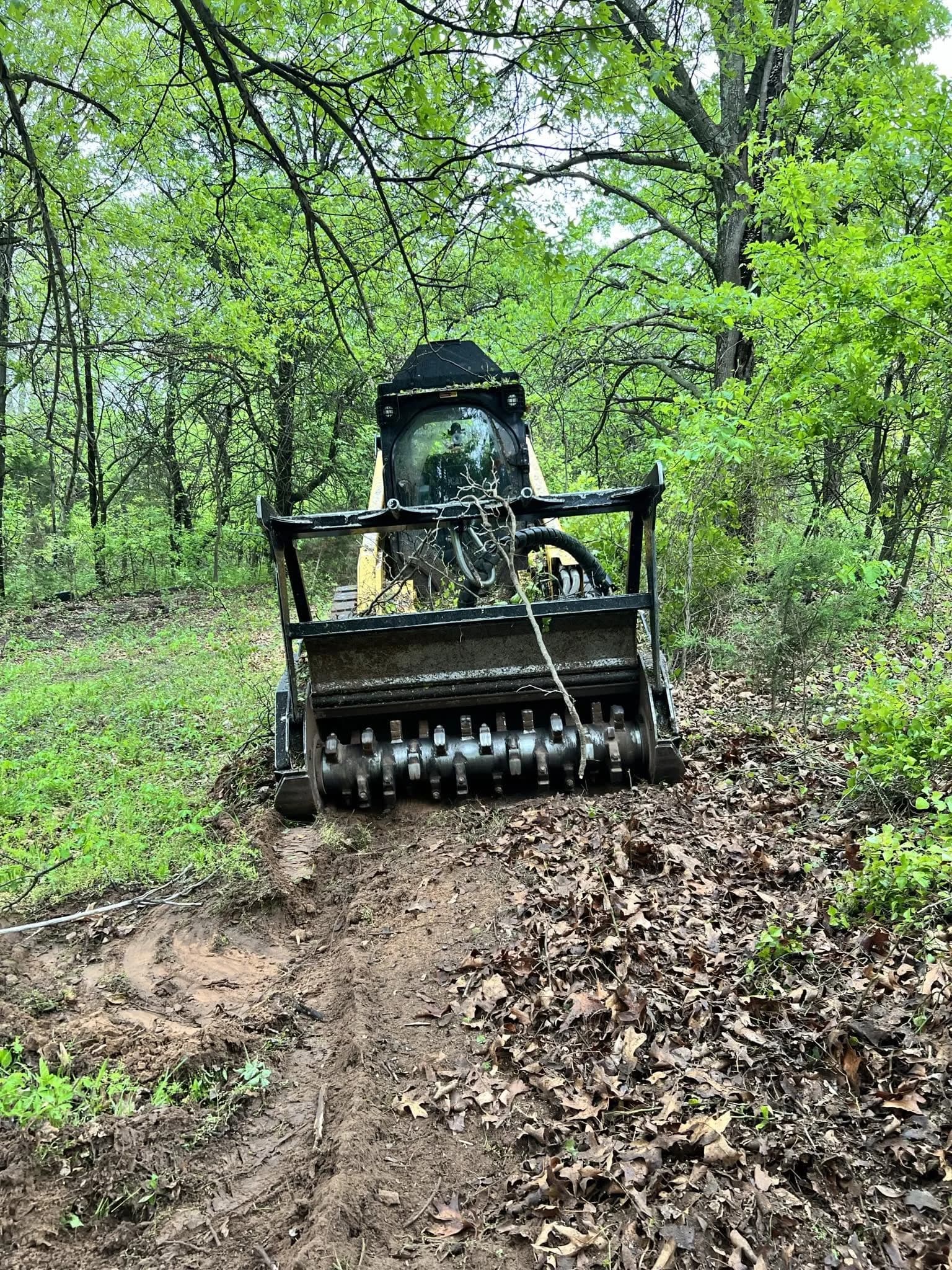
Straight talk: mulching is not cheap grubbing
Mulching is faster and usually less expensive than full clearing, and that tempts people to use it where it does not belong. If a slab, a driveway or a parking lot is going on the ground, the roots have to come out. Mulching under a building just buries the problem.
We will tell you which areas need full clearing and which do not, even when the cheaper answer is the wrong one for the job.
Head to Head
Clearing and grubbing
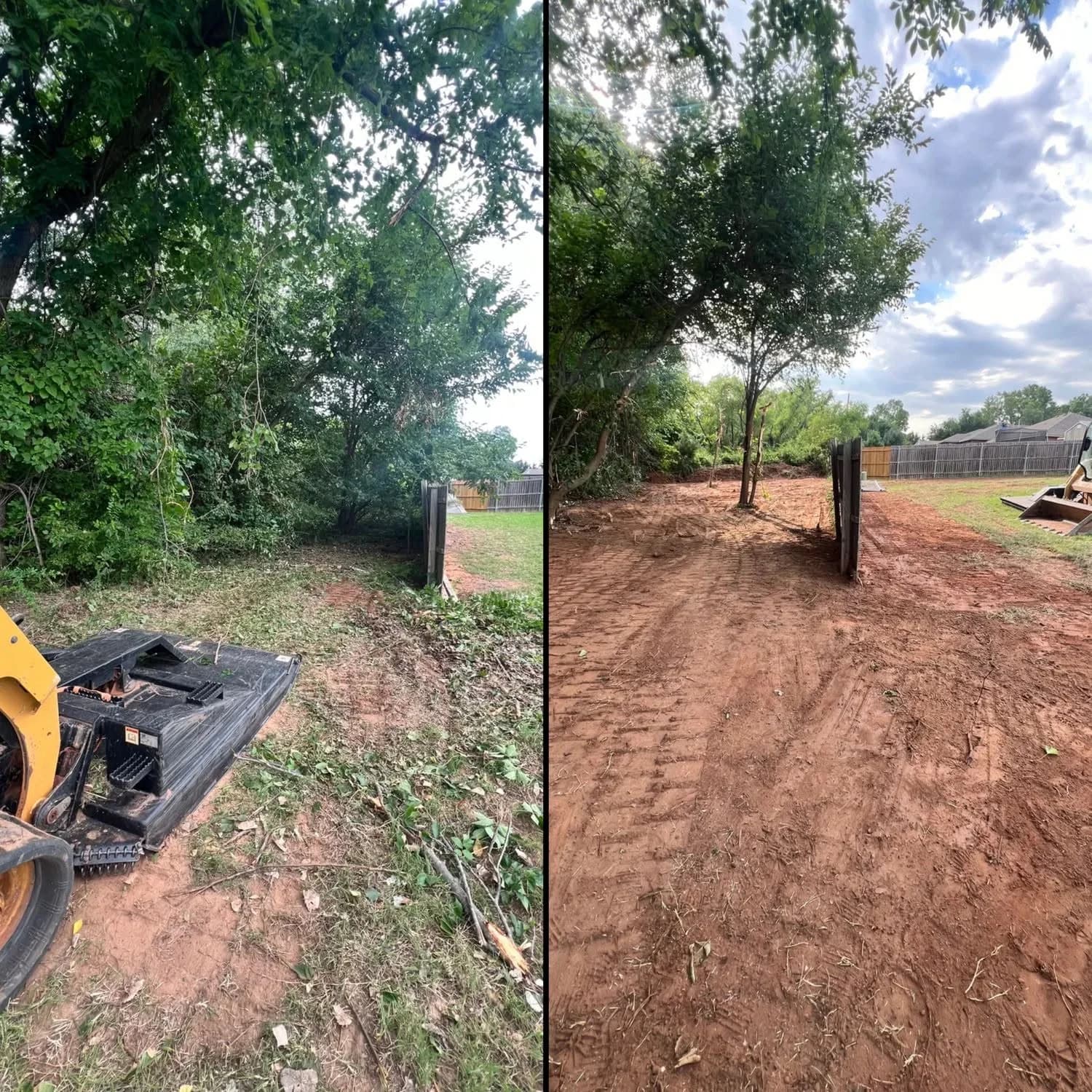
Trees, brush, stumps and roots are pulled out and the debris is hauled off or disposed of, leaving bare ground ready to grade.
Forestry mulching
A mulching head grinds standing brush and small trees into chips that stay on the ground as cover. Roots stay in place.
| What you're comparing | Clearing and grubbing | Forestry mulching |
|---|---|---|
| What is left behind | Bare ground, ready to grade. | A layer of mulch on the surface, with roots still in the ground. |
| Building on it | Yes. This is how a building site is prepared. | No. Roots and organic material left under a slab rot and settle. |
| Erosion | Ground is exposed until it is graded and built on or seeded, so erosion control matters. | The mulch layer protects the soil from washing. |
| Debris | Trees and stumps have to be hauled off or disposed of. | Nothing to haul. The material stays on site as mulch. |
| Disturbance | Heavier: equipment works the ground to pull roots and stumps. | Lighter: the machine works from the surface. |
| Regrowth | Roots are gone, so regrowth is mostly from seed. | Some species resprout from the roots and need follow-up. |
Where Each One Is the Right Call
Clearing and grubbing: best for
- Building pads, driveways and anything that will carry a slab or pavement
- Sites going straight into earthwork and subgrade
- Lots where stumps would be in the way of grading
- Areas where buried roots would rot and settle later
Forestry mulching: best for
- Overgrown lots you want usable and walkable again
- Fence lines and property lines
- Pasture and acreage where the ground should stay covered
- Selective thinning around the trees you want to keep
Many lots get both
A common job is a wooded lot where only part of it will be built on. The building footprint, driveway and yard get fully cleared and grubbed. The back of the lot gets mulched and the good trees stay. That costs less than clearing everything and leaves a better lot.
Walk it before anyone prices it
Density, tree size, slope, what stays and where debris can go all change a clearing job. We walk it with you, mark what comes out, and agree on the method area by area before equipment shows up.
What Your Ground Changes
The metro is not one kind of site. What is obviously the right call on a built-out redevelopment lot is the wrong one on a wooded tract, and the ground and the site underneath decide it.
Edmond, OK
Oklahoma County
East Edmond is heavily timbered with oak and dense brush. Building sites there usually start with clearing and grubbing, while the back of a wooded lot is a good candidate for mulching.
Site work in EdmondNorman, OK
Cleveland County
The east side of Norman is wooded, and much of the city drains toward Lake Thunderbird. Keeping exposed ground covered matters here, which is one reason mulching makes sense where nothing will be built.
Site work in NormanMoore, OK
Cleveland County
In Moore the clearing jobs are mostly overgrown in-town lots and fence lines, along with brush on the edges of commercial sites before earthwork starts.
Site work in MooreWhat This Looks Like on the Ground
Frequently Asked Questions
Can I build on a lot that was forestry mulched?
Not on the mulched area as it is. Mulching leaves roots in the ground and a layer of organic material on top, both of which rot and settle under a slab or pavement. Building areas need full clearing and grubbing.
Is forestry mulching cheaper than land clearing?
Usually, because there is no stump removal and no debris to haul. But it only fits ground that will not be built on.
Can you keep some of the trees?
Yes. Selective clearing and mulching around the trees you want to keep is common. Mark them on the site walk.
What happens to the trees you remove?
They are hauled off, or burned where local rules allow it. We agree on disposal before the job starts.
The Work Behind This Guide
Everything above is one of these services, or the drainage work that keeps it from failing.
Still not sure which one your ground wants?
Tell us where the gate is and what you are trying to end up with. We will walk it and tell you what we would build, including when the answer is less work than you were expecting.
Contact Us Directly
Prefer to call or email instead of filling out the form? Reach us directly:
Phone
(405) 265-8749Hours
- Monday – Friday8:00 AM – 5:00 PM
- Saturday9:00 AM – 5:00 PM
- Sunday12:00 PM – 4:00 PM
Service Area
Oklahoma & surrounding states. We travel 3–5 hours for commercial sites.